
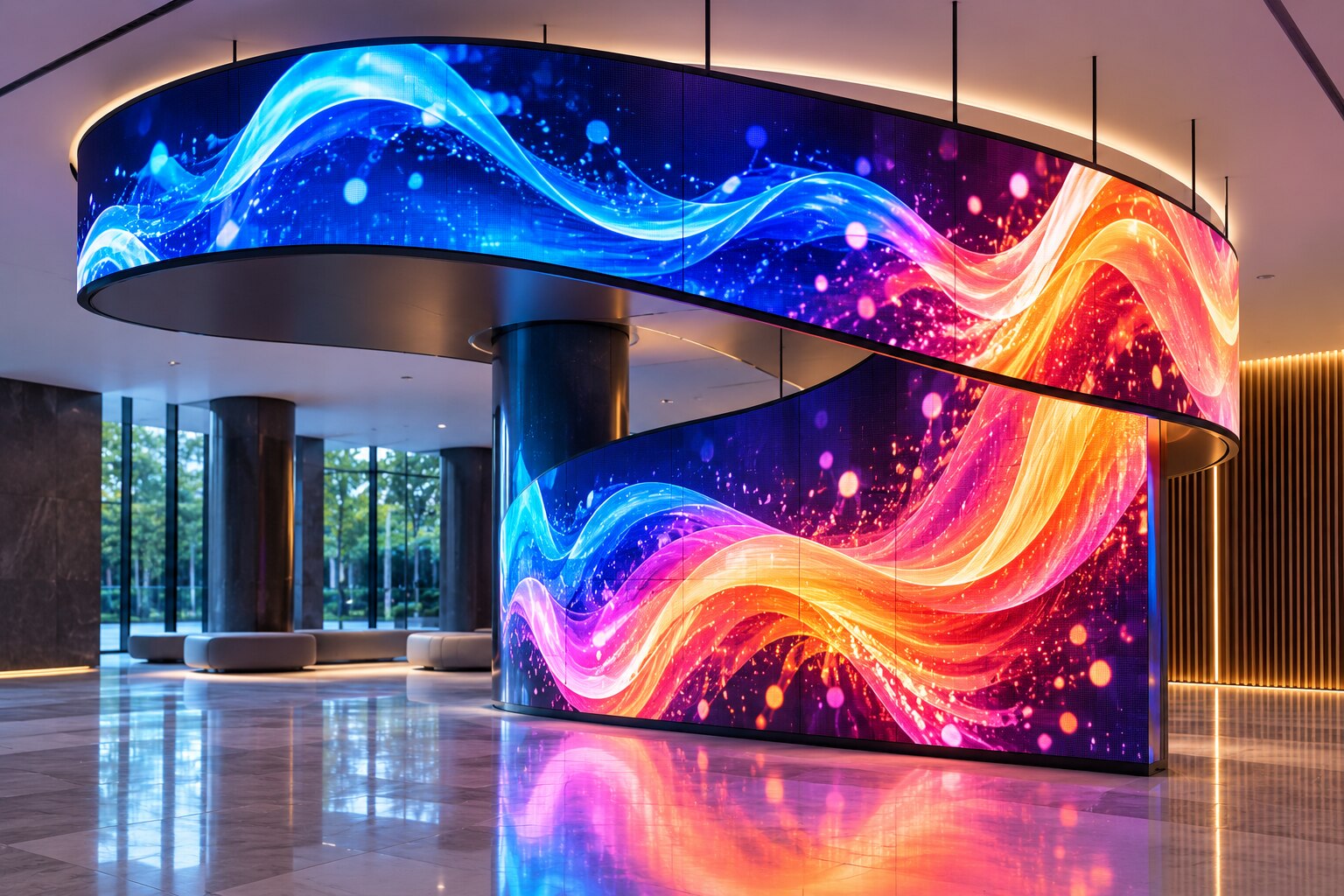
A hotel LED feature is a coordinated visual system, not a wall of panels: its success depends on the display hardware, room conditions, content workflow, electrical design and service access. By the end, you will be able to define the package, match the format and pixel pitch to each hotel area, and check an installation before guests encounter glare, blank screens or visible seams.
Key takeaways
- Include structure, processing, power, control, access and maintenance documents.
- Measure sightlines, viewing distance, wall load, ventilation and service access before ordering.
- Use fine-pitch displays for close lobby viewing and larger pitches for distant signage.
- Require brightness limits, content tests, spare parts and signed commissioning records.
What belongs in a hotel creative LED display package?
A creative LED display for hotels in Pune is a complete operating system, not a rectangle of panels.
The package includes LED modules, cabinets or a fabricated support frame, receiving cards, a sending card or video processor, power supplies, data and power cabling, mounting hardware, a media player, content-management software, commissioning, and spare modules and power supplies.
Ask the supplier these package questions before comparing prices:
- Is the video processor included, and does it support custom pixel mapping for curves, rings, steps or triangles?
- Who designs and supplies the support structure, and who verifies anchors, dead load and service access?
- Are display power, processor power, network connections, earthing, surge protection and circuit segregation listed separately?
- Where are replacement modules and power supplies stored, and how will technicians access them?
- Does the CMS keep playing scheduled content during a network outage?
- Is local fallback content stored on the media player?
- Are user permissions, media-format limits, remote health monitoring and VLAN or firewall requirements included?
A quotation that lists only screen area hides the control, electrical and service infrastructure that keeps the image running. Commissioning must cover cabinet matching, low-brightness grayscale, seams, flatness, dead-pixel records and a normal brightness preset. The hotel should receive wiring diagrams, processor settings, spare-parts records and operating instructions, not just an illuminated surface.
How do you measure and engineer the hotel installation site?
Record the site before ordering a creative LED screen installation: wall width and height, ceiling height, nearest and farthest normal viewing distances, columns, arches, door swings, fire exits, sprinkler heads, smoke detectors, ventilation routes and available electrical capacity. Photograph concealed services and mark cleaning and inspection access.
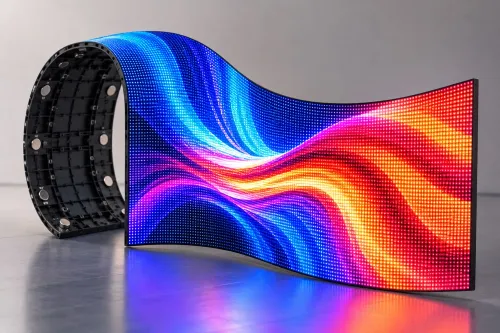
Curved, ring-shaped, stepped and triangular screens need an explicit pixel map, not a standard 16:9 assumption. Confirm the pixel count, custom masking, scaling and content-safe areas with the processor and CMS before fabrication, or text and logos will land in unusable gaps.
Service choice changes the room design:
| Access type | Best fit | Main constraint |
|---|---|---|
| Front service | Finished lobby wall or restricted corridor | Allow tool clearance at the screen face |
| Rear service | Dedicated service zone behind the display | Keep permanent rear access available |
Ask the installer to document the minimum bend radius, module segmentation, visible-seam risk, total dead load, eccentric loads from curves or cantilevers, access loads, anchor capacity and frame deflection. A frame drawing must be reviewed with the structural engineer and coordinated around concealed services.
Include heat load and ventilation clearance in the design. Specify display power separately from processor and network power, then confirm earthing, surge protection, circuit segregation and the shutdown procedure; a UPS often protects control equipment better than the entire wall.
Gypsum, stone and timber finishes are finishes, not automatic structural supports. Use a reviewed frame and approved anchors, and have fire-safety and building-services professionals check egress, exit signs, fire equipment, sprinklers and smoke-detection access.
Which display format and pixel pitch suit each hotel space?
A custom led display for hotel lobby viewing should be sized from the nearest normal viewing distance, not the wall area. Use roughly 1.2–2.5 mm pitch for guests standing 1–3 metres away; 2.5–4.8 mm suits viewing from several metres. Smaller pitch gives finer text and better photographed detail, but costs more.
| Space | Better fit | Practical choice |
|---|---|---|
| Reception counter | Flat fine-pitch LED or poster display | Choose 1.2–2.5 mm for welcome text; use a poster display for rotating notices. |
| Lobby feature wall | Flat fine-pitch LED or flexible modules | Use 1.2–2.5 mm for close viewing; flexible modules suit curves, rings and sculptural forms. |
| Lift waiting area | Poster display, LCD video wall or LED | Use 2.5–4.8 mm when guests stand several metres away. |
| Corridor | Poster display, printed décor or narrow LED | Printed décor wins when content rarely changes. |
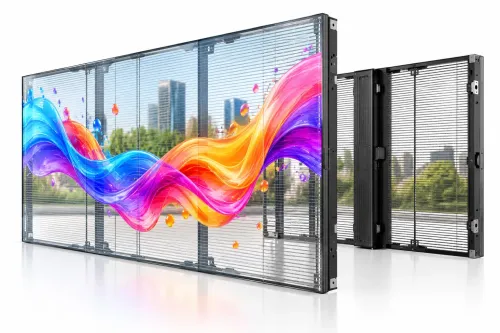
| Restaurant | Transparent LED or fine-pitch LED | Transparent screens preserve sightlines through glass or partitions. |
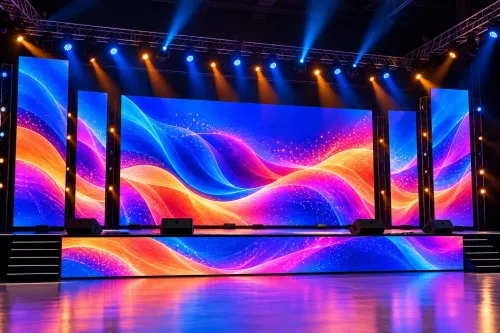
| Banquet hall | 2.5–4.8 mm LED, LCD video wall or projection | LED handles bright rooms; projection suits controlled lighting and temporary events. |
| Spa | Projection, printed décor or flexible LED | Projection creates calm ambient scenes when glare is controlled. |
| Guest-room entrance | Printed décor or small poster display | Use LED only where messages change frequently. |
A hotel creative display with a non-rectangular shape needs pixel mapping, masking and content-safe areas. LED is the wrong choice when content changes are rare; projection, LCD video walls or printed décor then reduce complexity and cost.
What content and operating settings keep guests comfortable?
Show useful, calm content rather than a permanent brand loop: welcome messages, wayfinding, event schedules, restaurant menus, local attractions, brand films and slow ambient motion backgrounds. Keep text large, high-contrast and brief, with uncluttered layouts and a readable safe area away from curved edges, cabinet seams and irregular shapes.
Set the screen to change with hotel activity:
- Breakfast: display restaurant hours, buffet details, coffee service and simple wayfinding.
- Daytime: rotate local attractions, meeting-room directions, menus and restrained brand films.
- Evening: prioritise event schedules, banquet directions, dining information and slower visual content.
- Overnight: use a low-brightness welcome, security message or dark ambient background instead of a bright promotional loop.
- Brightness: specify an operating range of about 600–1,200 cd/m² for a controlled lobby, then use automatic dimming near glazing. Higher output is not automatically better; it creates glare on polished stone, glass and guest photographs.
- Motion and sound: avoid rapid animation, flashing transitions and loud audio near reception or dining areas. Check for visible flicker at low brightness.
- Cameras: request a processor and LED driver combination around 3,840 Hz or higher, then test it with the actual camera, shutter speed and scan mode.
Approve a one-cabinet mock-up before fabrication. View it with the final LED driver, scan mode, reflections, moiré, decorative lighting and colour temperature together; a specification sheet alone cannot reveal rolling lines or distracting glare.
What must commissioning and handover prove?
Acceptance starts with evidence, not a powered-up screen. For a creative led display in Pune, require a signed commissioning record showing that the finished installation works with the hotel’s materials, lighting, network and safety systems.
1. Approve a one-cabinet or sample mock-up before fabrication. Test glass, mirrors, brass, polished stone and decorative lighting for reflections, moiré, viewing angle, black levels, colour temperature and fan noise.
2. Calibrate the installed wall cabinet by cabinet. Check brightness and colour matching, low-brightness grayscale, flatness, seam width and alignment; record every dead pixel by cabinet location and set a documented normal-operation brightness preset.
3. Record operating data at handover. Require typical and maximum power figures, thermal measurements, module and power-supply replacement times, front-service or rear-service instructions, and a labelled spare-parts inventory.
4. Prove the control workflow. Handover must identify CMS permissions, supported and unsupported media formats, local fallback content, playback during network loss, remote health monitoring, and the VLAN or firewall rules needed for access.
5. Obtain written review from fire-safety and building-services professionals. They must verify egress, exit signs, fire extinguishers and other equipment, sprinkler heads, smoke detectors, inspection routes and cleaning access; a decorative screen must not block any of them.
6. Compare SBW TECHNOLOGY PVT LTD against this evidence-based scope, including drawings, test records and service instructions, rather than judging panel appearance alone. A blank lobby wall after a network outage is an avoidable handover failure.
Related products
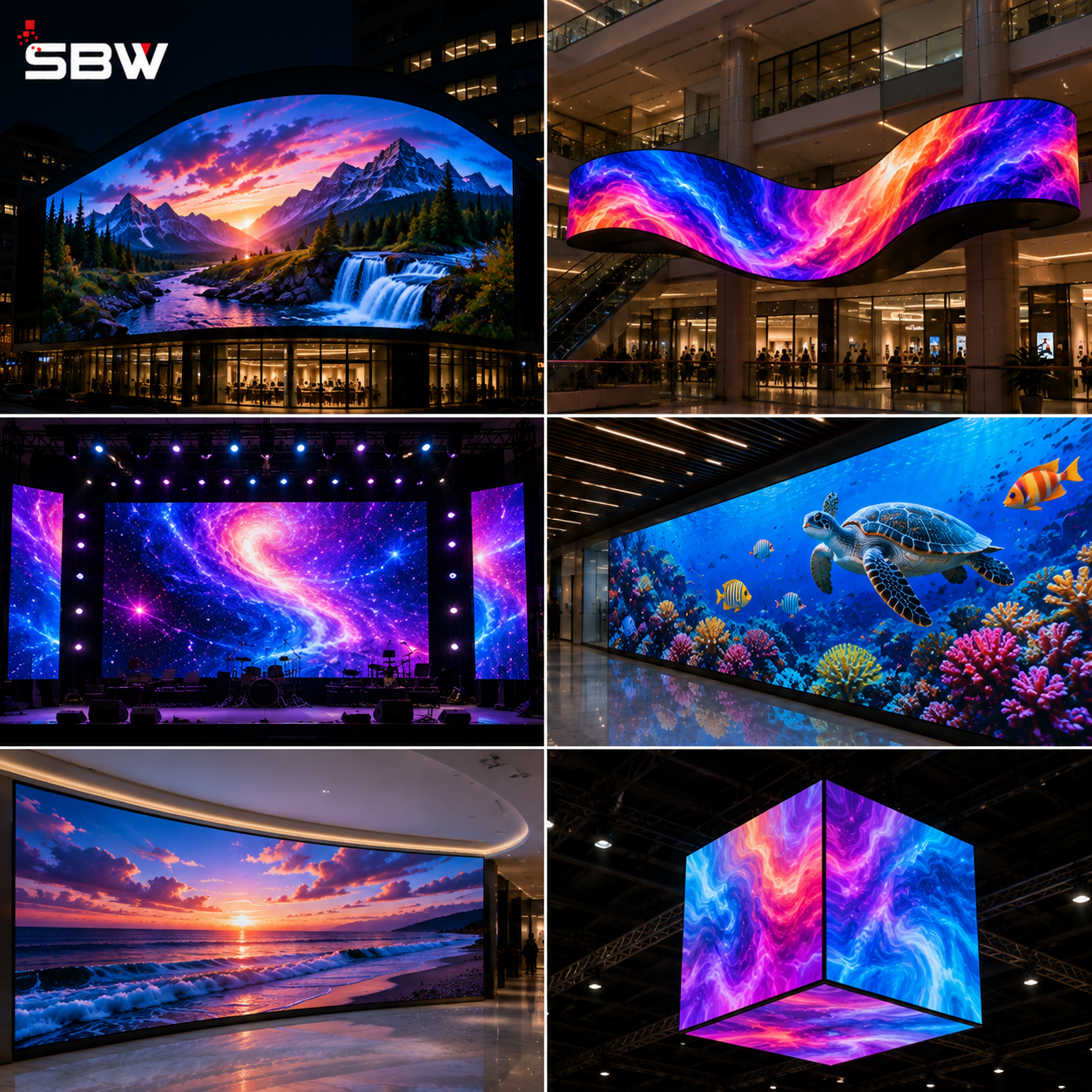 | Creative Displays SBW Technology Private Limited offers innovative Creative LED Displays designed to transform conventional digital signage into visually striking and... View product → |
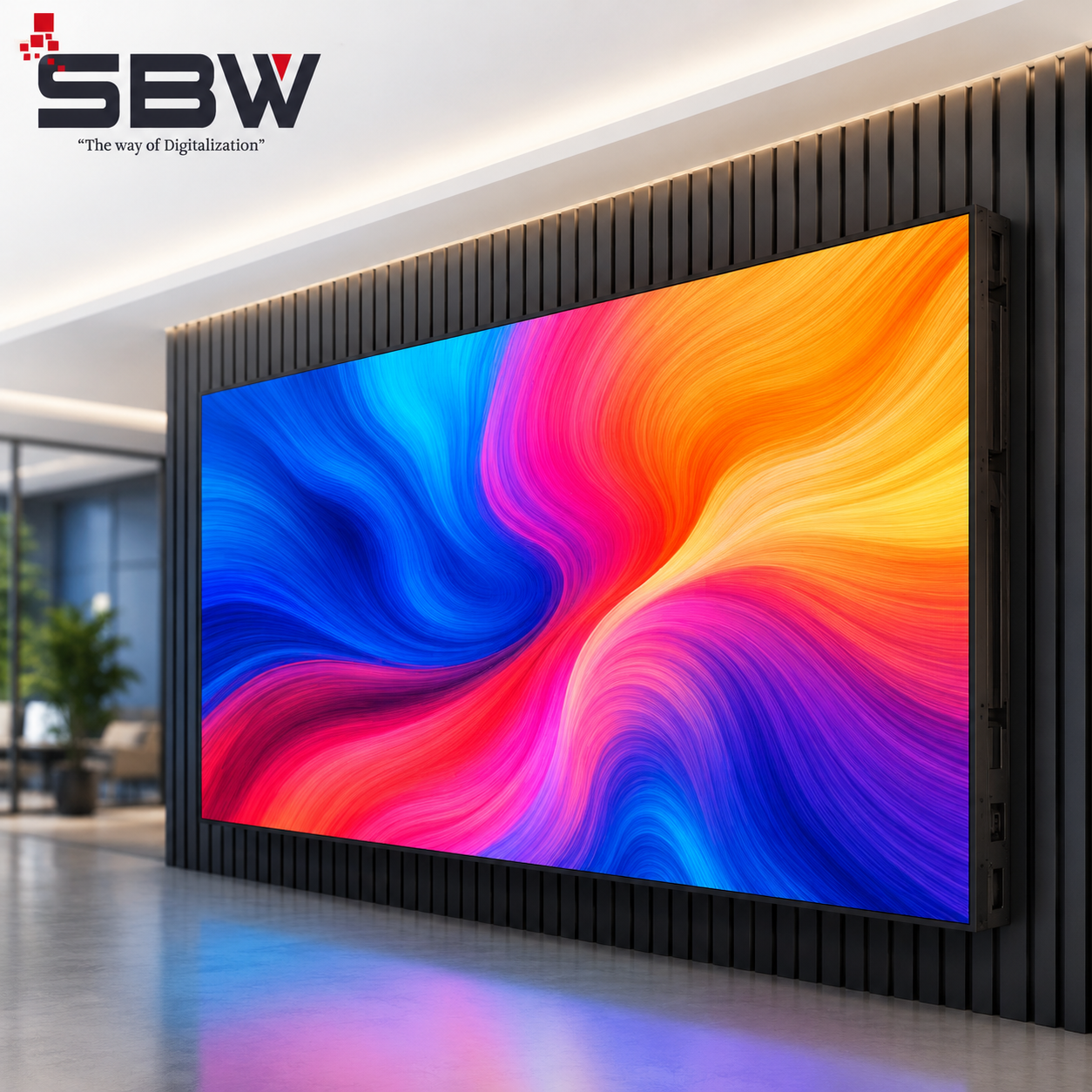 | Indoor LED Display SBW Technology Private Limited offers Indoor LED Displays designed to deliver bright, sharp and vibrant visuals for professional indoor environments. View product → |
Frequently asked questions
What belongs in a hotel creative LED display package?
Specify the LED modules, cabinets or shaped structure, receiving cards, video processor, power distribution, control software, cabling, mounting, ventilation, maintenance access, spare parts and documentation.
How do you measure and engineer a hotel LED installation site?
Record wall dimensions, viewing distances, sightlines, structural load capacity, power routes, ventilation, ambient light, service access and restrictions from fire or interior systems before fabrication.
Which display format and pixel pitch suit each hotel space?
Use fine-pitch flat or curved displays for close lobby viewing, larger pitches for distant atriums and wayfinding, and shaped or transparent formats only when the architecture and viewing geometry justify them.
What content and operating settings keep hotel guests comfortable?
Set brightness to suit ambient light, avoid rapid flashes and excessive motion, test text readability at guest viewing distances, and schedule content that fits the lobby, lift, banquet or façade context.
What must commissioning and handover prove?
Commissioning should document pixel and colour checks, brightness and playback tests, processor and control operation, network access, power isolation, thermal performance, cleaning guidance, warranties and staff training.
Related products
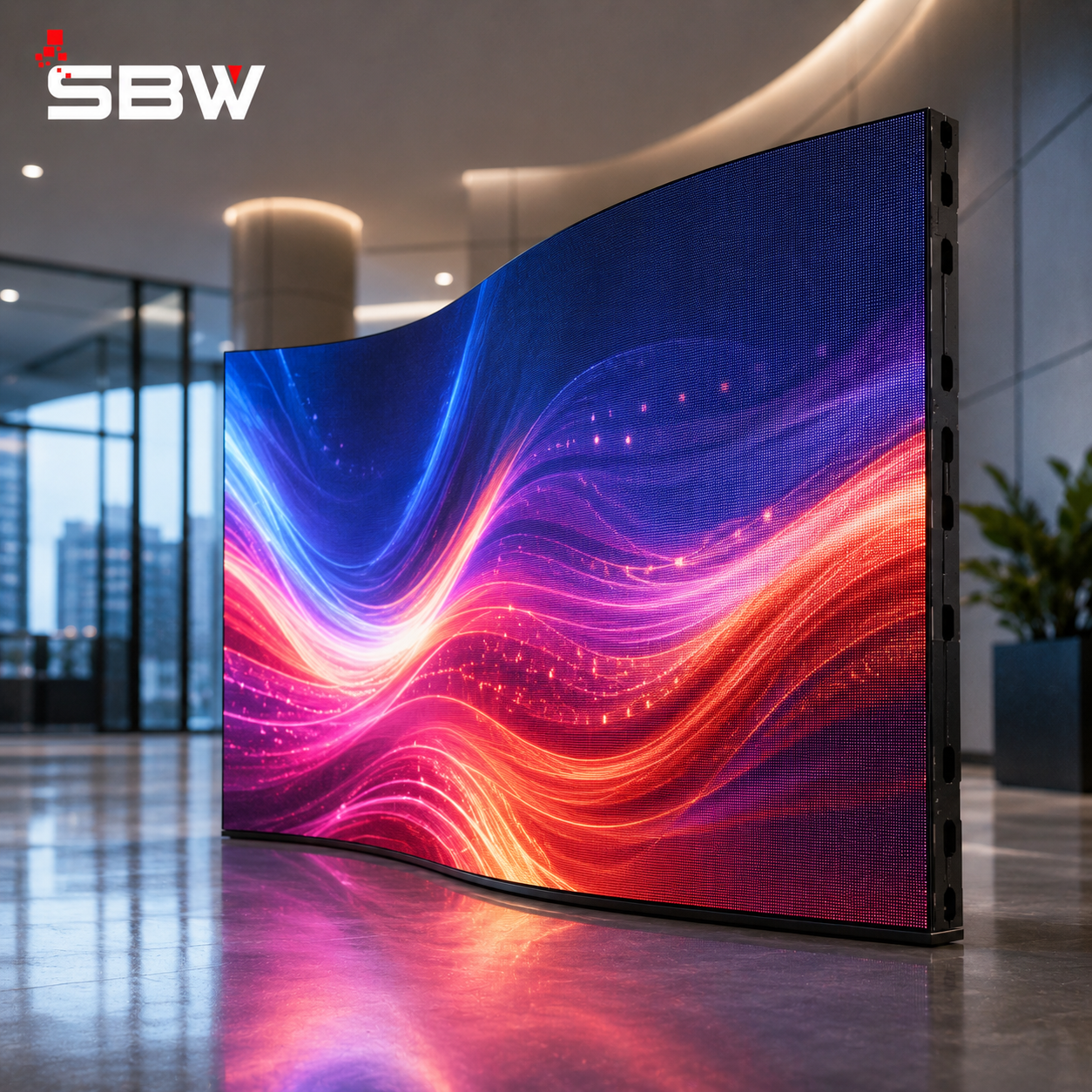 | Flexible LED Display SBW Technology Private Limited offers Flexible LED Displays designed for creative and curved digital display installations. View product → |
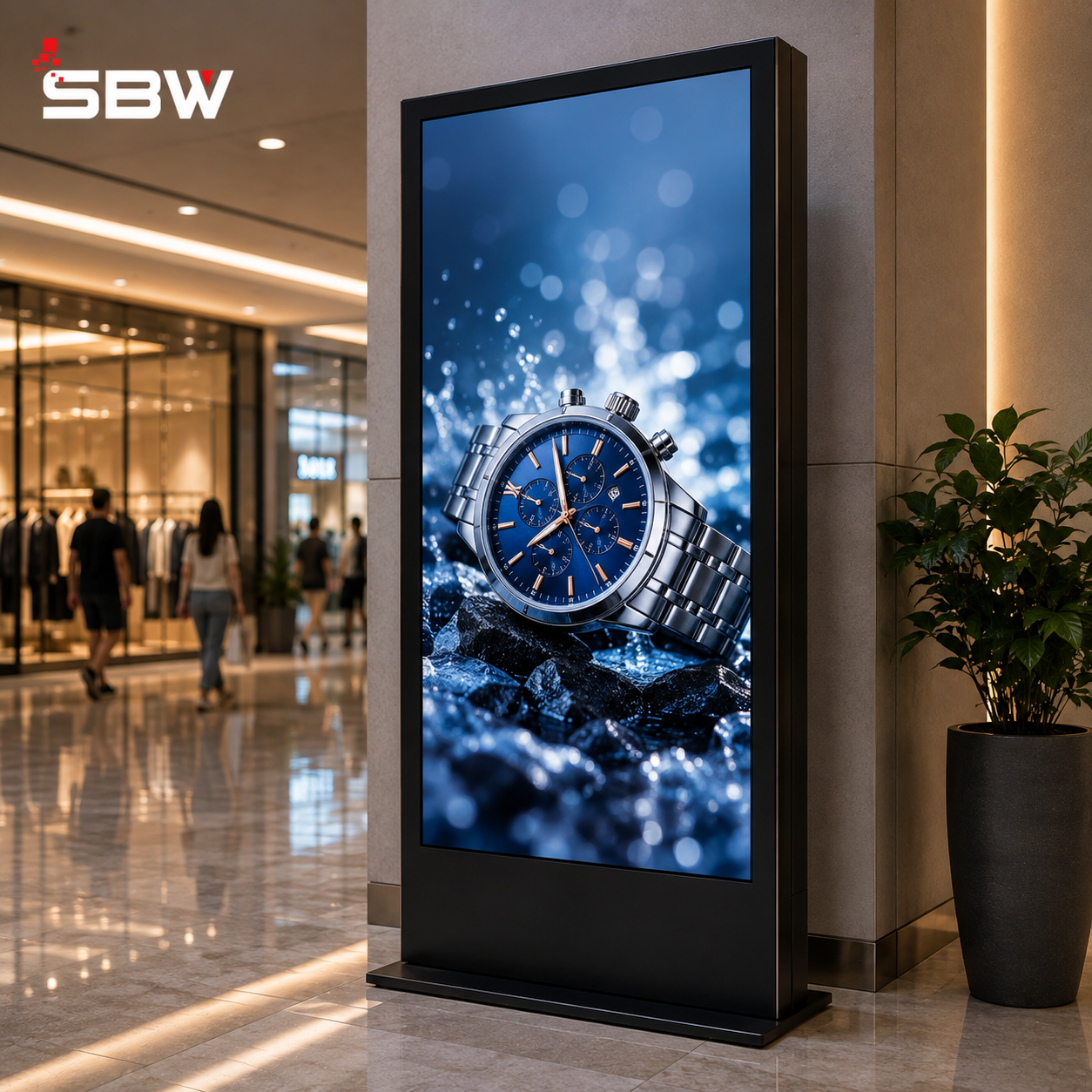 | Poster LED Display SBW Technology Private Limited offers Poster LED Displays designed for modern digital advertising, promotions, branding and information... View product → |
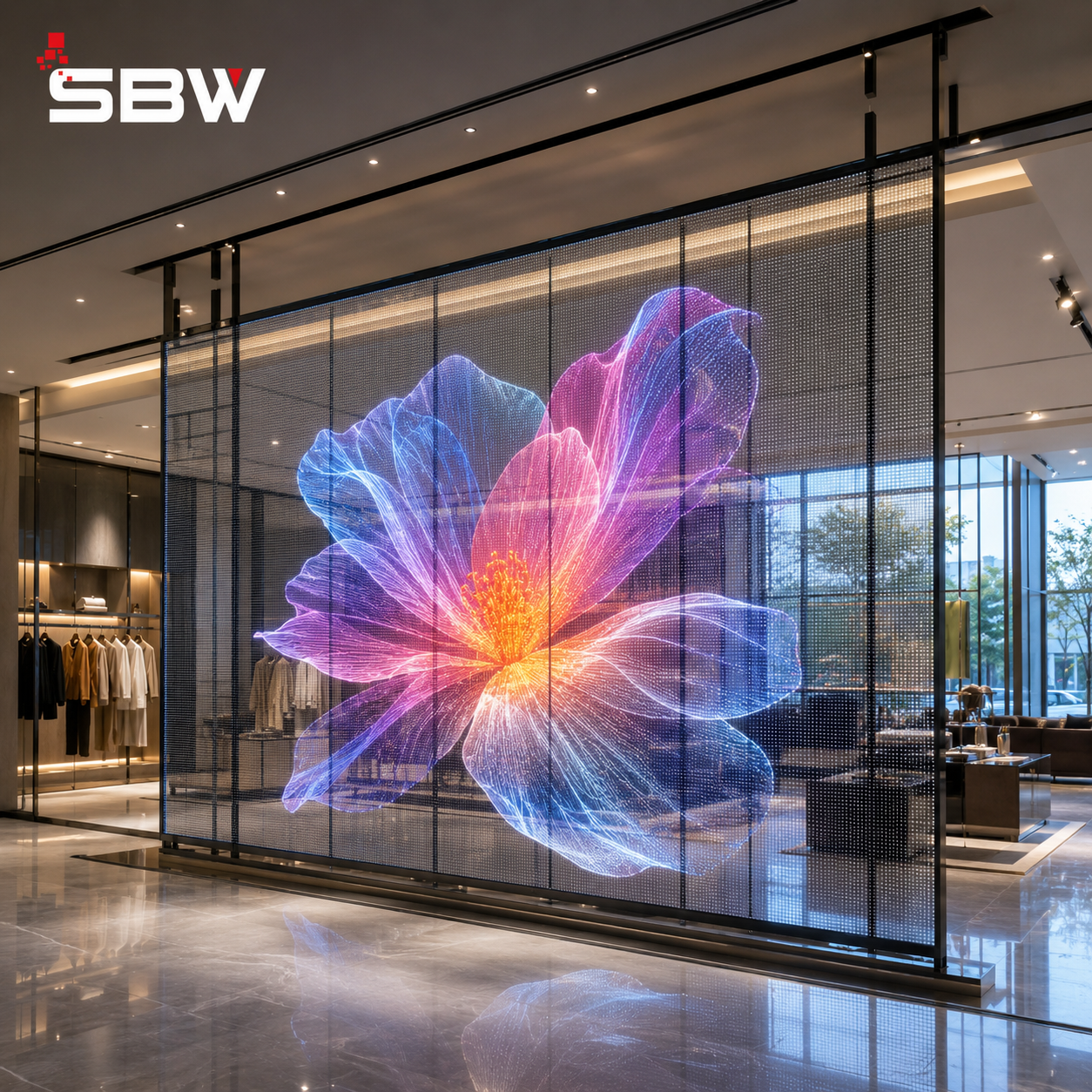 | Transparent LED Display SBW Technology Private Limited offers Transparent LED Displays designed for modern glass-front architecture, retail stores, shopping malls,... View product → |
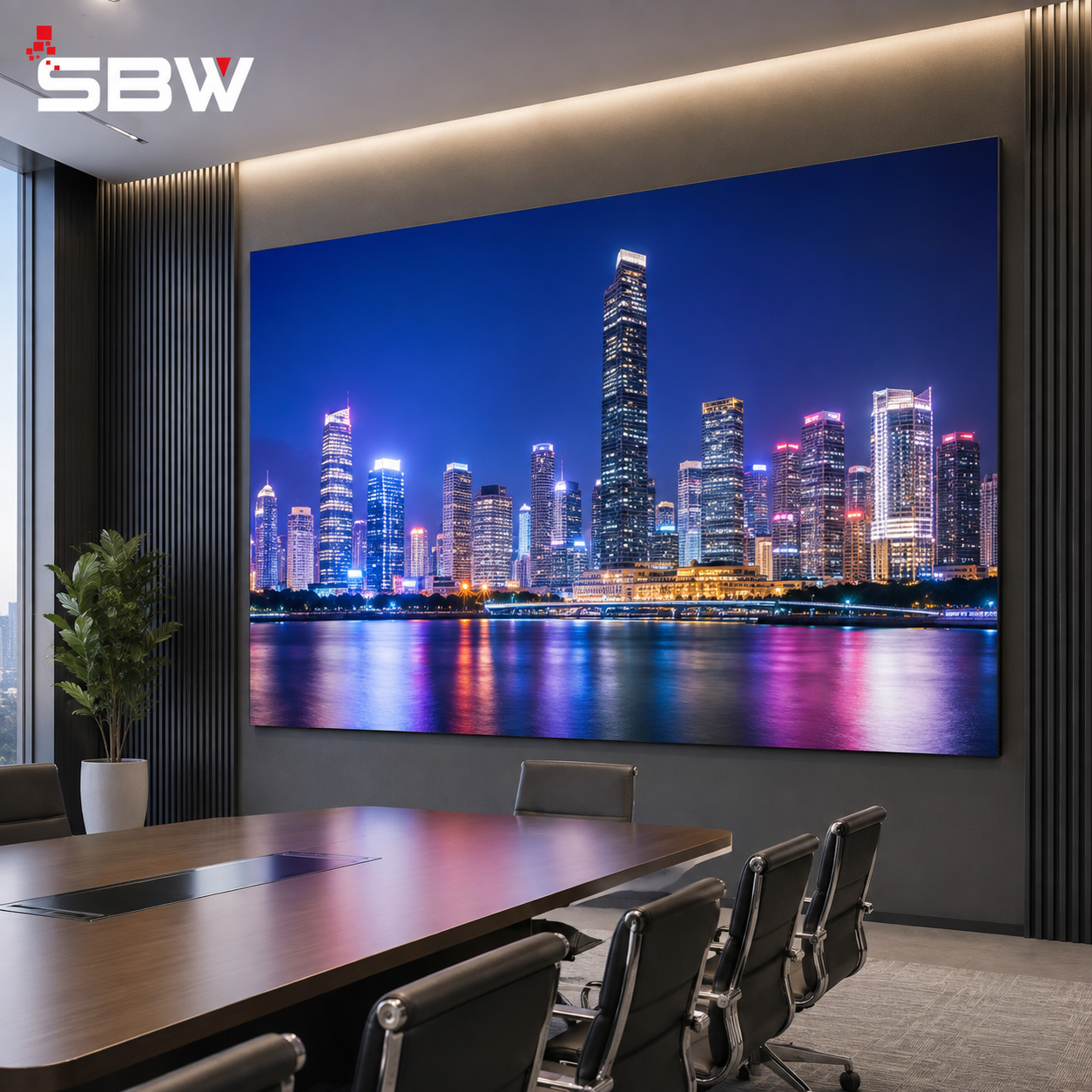 | Fine Pitch LED Display SBW Technology Private Limited offers Fine Pitch LED Displays designed for applications that require exceptional image clarity, sharp details and... View product → |