
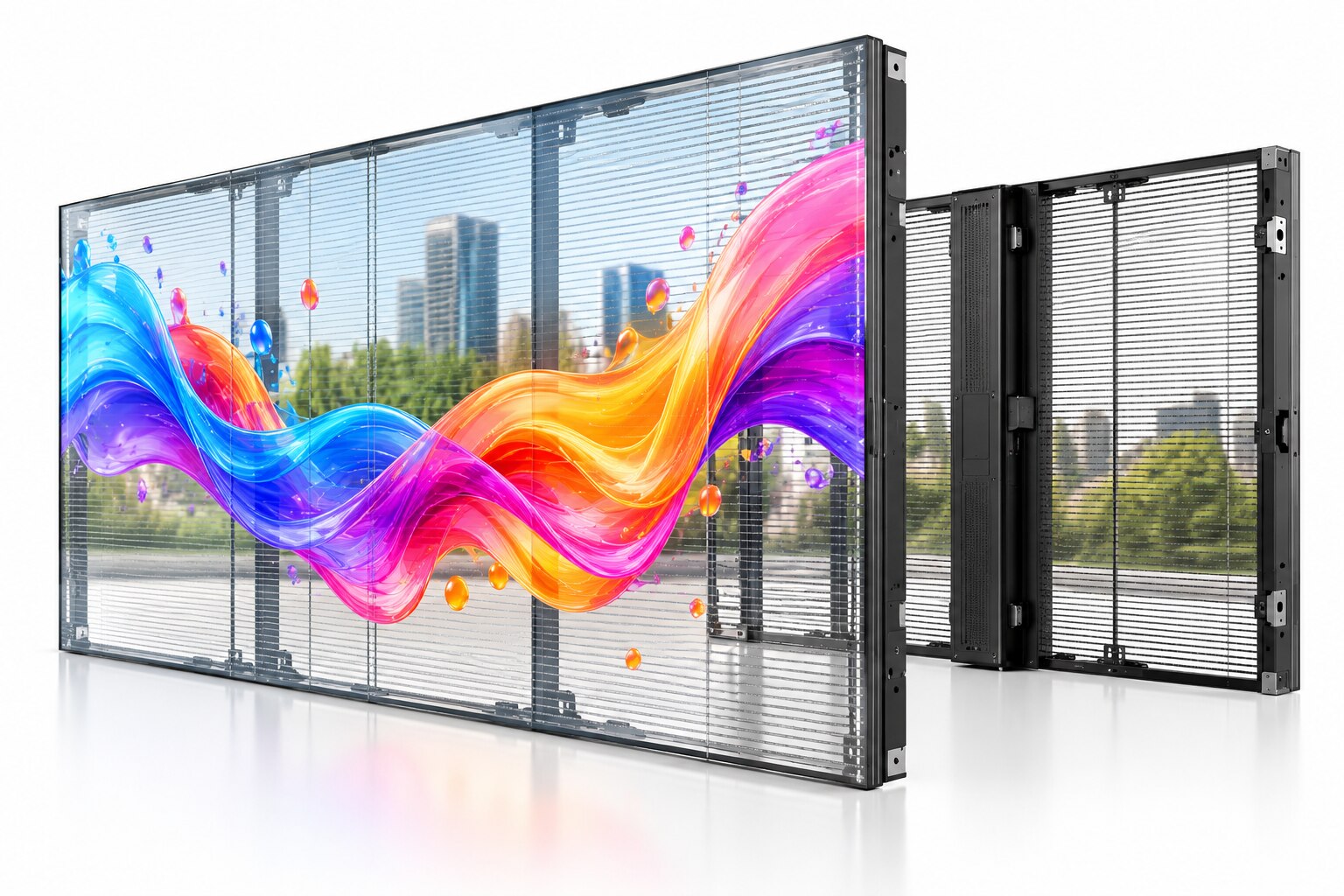
Blocked office glazing is not always a screen problem: blinds, solar-control film, mullions, furniture and reflections can each create a different obstruction. By the end, you can identify the actual cause, compare display alternatives, and prepare a Pune-specific specification that covers readability, structure, permissions, heat, rain and maintenance.
Key takeaways
- Identify whether blinds, film, glare, privacy needs or construction block the glass.
- Choose transparent LED only when preserving daylight and interior visibility matters.
- Specify pixel pitch, brightness, viewing distance and facade geometry together.
- Request weather protection, structural fixing, maintenance access and building approvals in writing.
What is blocking the office glass, and can a transparent LED display address it?
For a transparent LED display for glass front problem in Pune, first find what actually blocks the view. A display adds moving content; it does not restore clear glass.
Its LED strips, cables, rails and framing still form an opaque pattern, so advertised 60–90% transparency is not the same as preserving 60–90% of the original view.
| Obstruction | What to check | Can a transparent LED address it? |
|---|---|---|
| Glazing | Tinted, reflective or low-E glass; compare daylight and night reflections | Partly; test brightness through the actual glass |
| Blinds | Slats, roller blinds or closed solar shades | No; open, relocate or remove them first |
| Film | Printed graphics, frosted film or solar-control film | No; remove or redesign it unless the film itself is the message |
| Mullions | Vertical or horizontal curtain-wall members crossing the intended image | Only around them; the display will not erase their obstruction |
| Furniture | Cabinets, partitions or plants behind the panes | No; move the object or change the viewing zone |
| Poor sightlines | Viewers looking from oblique corridors or behind partitions | Rarely; reposition the display or improve the sightline |
For an office transparent display in Pune, use a full-scale paper mock-up before ordering. Check visibility from the nearest viewer, typical approach and opposite building, then compare the internal and external mounting position: inside protects against rain but loses brightness through glass, while outside demands weatherproofing, wind design and safe service access.
A transparent LED display fits when the glass remains useful and the goal is visible digital messaging, not a clear view through an existing obstruction.
Which display or building change fits the obstruction?
Choose the display by deciding how much glass view you must retain and how detailed the message needs to be. Use a full-scale paper mock-up on the panes before fabrication; it exposes poor sightlines, mullion interference and unreadable text.
| Option | Best fit | Main limitation |
|---|---|---|
| Transparent LED | Large text, logos and high-contrast video where partial daylight and visibility must remain | LED strips, rails and cables still obstruct the view; fine text suffers |
| Printed window graphics | Permanent branding or privacy where no see-through view is needed | No animation, updates or daylight-through visibility |
| LCD window display | Detailed menus, schedules and close viewing behind glass | Opaque, reflective and vulnerable to Pune daylight; needs depth, power and cooling |
| Conventional indoor LED wall | Detailed content viewed from a controlled interior distance | Blocks the glass completely and needs a solid mounting surface |
| LED mesh | Large outdoor messages where airflow, daylight and lower weight matter | Lower image detail and visible structure; facade engineering is essential |
| Remove or relocate obstruction | Blinds, furniture, partitions or equipment causing the blockage | Solves the sightline rather than adding a communication surface |
Transparent digital signage in Pune suits a glass front when the message must be noticed from outside but the room should remain partly visible. It is the wrong substitute for a monitor when viewers must read spreadsheets, menus or detailed product information.
For an office transparent display in Pune, test reflections at morning, noon and evening. A darker interior or strong nearby lighting can erase low-contrast content, while excessive brightness creates glare. Keep brightness control, large type and short messages in the brief.
How should you specify pitch, brightness and facade geometry?
Start with a measured elevation, not a screen size. Record each pane’s width and height, mullion and transom positions, opaque spandrels, blinds, partitions, nearest viewer distance, typical viewing distance, and sightlines from the road and reception.
Use those measurements to choose pixel pitch. A tighter pitch supports smaller text but reduces open area, raises cost, and increases power demand. Test the intended message at both viewing distances with a full-scale printed mock-up before approving fabrication.
Put the transparent digital signage in Pune brief in writing:
- Usable image area after deducting mullions, frames, blinds and partitions.
- Pixel pitch selected for the nearest and typical viewer, with a readability test.
- Daytime and nighttime brightness targets, plus automatic dimming.
- Open-area transparency, LED strip width, cabinet framing and expected view through the glass.
- Internal or external mounting, support points, wind-load design, drainage and maintenance access.
- Maximum input current, inrush current, power factor, circuit separation, earthing and protection devices.
A transparent LED screen in Pune installed inside the glazing avoids direct monsoon exposure but loses output through glass and suffers reflections. An external system needs a load path to mullions, transoms or an independent frame; never treat curtain-wall glass as the structure.
Account for dead load, wind pressure and suction, vibration, thermal movement and maintenance loads.
Specify maximum electrical demand, not the supplier’s average consumption. Bright scenes can overload a shared lighting circuit, while a claimed 60–90% transparency figure does not represent the percentage of daylight or view you will retain.
What do Pune weather, building rules and maintenance access change?
An internal display sits behind the glazing, so monsoon rain and dust are easier to control, but Pune daylight, reflections and glass heat reduce visible brightness. An external glass facade LED display in Pune gives stronger output, but needs weatherproof modules, wind-load design, drainage and a dedicated support structure.
Check the site before accepting a quotation:
- Measure daylight luminance through the actual glass, then specify daytime brightness, night-time dimming and maximum power rather than comparing price per square metre.
- Inspect cable entries, connectors, horizontal ledges and the bottom edge. Require drip edges, cable loops, sealed glands, drainage paths and an inspection procedure; an IP rating alone does not prevent water entering badly made joints.
- Confirm heat rejection, dust cleaning access and wind-load calculations for the façade, support frame and fixings. Pune monsoon moisture can collect at low points even when the LED modules are rated for outdoor use.
- Obtain written approval from the property owner or facility manager, the applicable outdoor-signage authority, and electrical or fire-safety authorities when exits, access routes or services are affected. Check whether the site falls under PMC or PCMC.
- Keep fire exits, stairways, façade access, sprinklers, vents, electrical panels and window-opening paths clear. Specify how a technician removes a module without dismantling glazing or closing the office.
A transparent LED screen in Pune still contains strips, drivers, cables and rails, so advertised 60–90% transparency is not preserved view. Include spare parts, lifting equipment and scheduled cleaning in the maintenance plan.
What should a Pune office request in the quotation?
A comparable quotation starts with a testable scope, not a price per square metre. Use the same brief for every transparent led screen in pune or glass facade led display in pune supplier.
- State whether installation is inside or outside the glazing, the pane and mullion dimensions, retained transparency after framing, viewing distance, luminance through the actual glass, night-time dimming range and maximum power draw.
- Require test records for daytime visibility, full-white thermal performance, heat in the cavity, power consumption, dead pixels, colour uniformity and declared weather protection.
- Name the structural party responsible for dead load, wind pressure and suction, vibration, thermal movement and maintenance loads. Require drawings showing the load path to mullions, transoms or an independent frame; exclude direct loading on glass unless the façade designer approves it.
- Separate permission costs for the property owner or facility manager, PMC or PCMC signage approval, and electrical or fire-safety review where exits, access routes or services are affected.
- Price electricity at maximum load and an agreed operating schedule, including dimming, controller software, heat management and replacement parts.
- Specify front or rear service access, maintenance gaps, module and power-supply replacement, safe access equipment, response times and spare-part availability.
Ask SBW TECHNOLOGY PVT LTD to identify whether its scope covers survey, shop drawings, structure, display, power and data cabling, controller, installation, testing, operator handover, permissions, façade restoration and ongoing maintenance. Anything marked “by client” needs a named party and separate price.
Related product
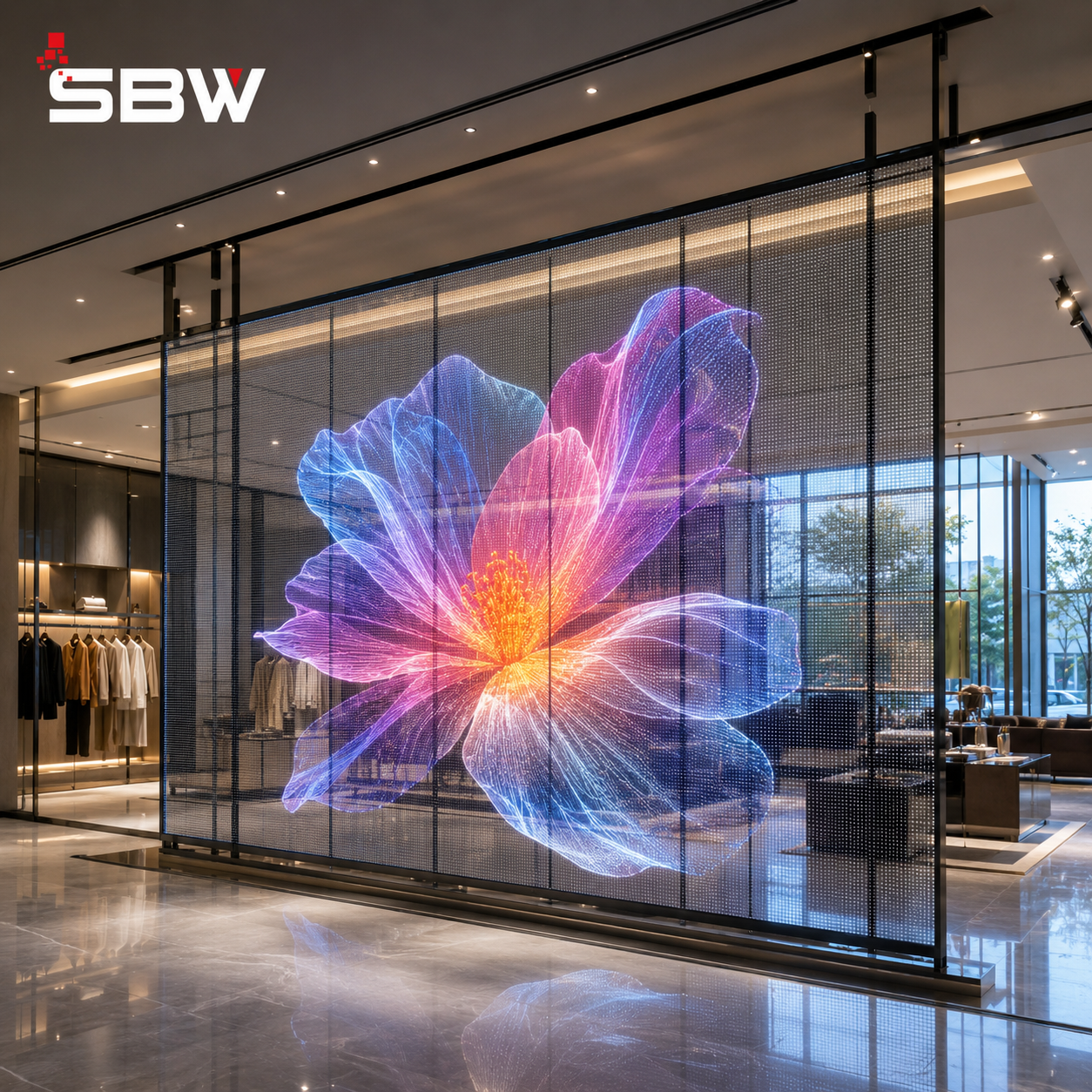 | Transparent LED Display SBW Technology Private Limited offers Transparent LED Displays designed for modern glass-front architecture, retail stores, shopping malls,... View product → |
Frequently asked questions
Can a transparent LED display solve every blocked office glass-front problem?
No. It adds moving content but does not restore clear glass. First identify whether blinds, opaque film, glare, privacy requirements, structural elements or construction cause the obstruction.
Which display or building change fits a blocked glass facade?
Use transparent LED when you need content while retaining some daylight and interior visibility. Choose conventional LED, digital signage, solar-control film, blinds or a building alteration when those options better address glare, privacy, heat or physical obstruction.
What should you specify for a transparent LED display on a Pune office facade?
Specify pixel pitch, viewing distance, required brightness, transparency target, cabinet or module dimensions, mounting method, facade angles, content resolution and service access.
What should a Pune office include in the LED display quotation?
Request structural fixing details, wind and rain protection, electrical load, controller and content system, installation method, maintenance access, warranty terms, replacement-part scope and responsibility for building permissions.