
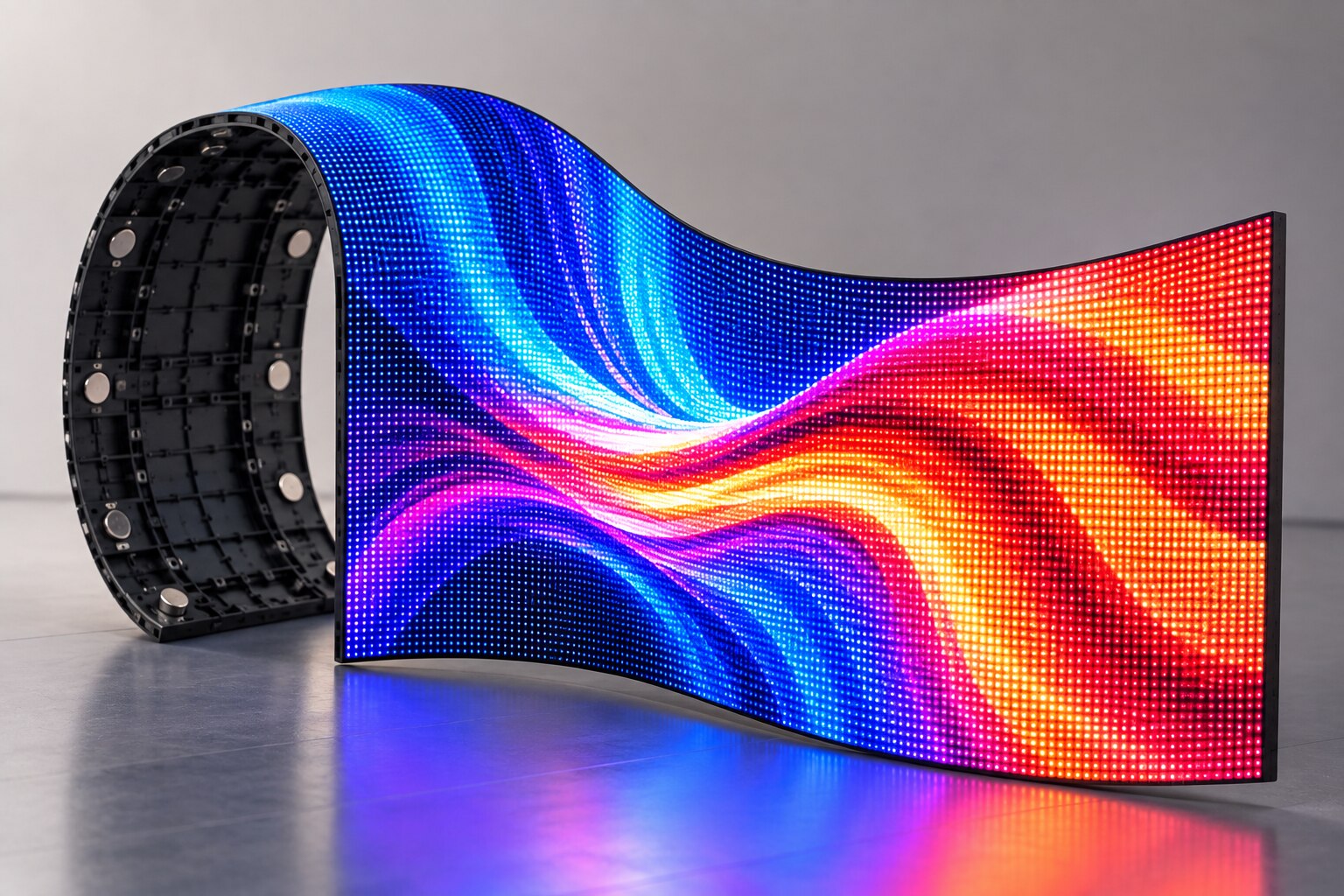
A flexible LED display earns its extra cost only when the hotel’s architecture, viewing distances and guest experience benefit from a curved or irregular visual surface. By the end, you will be able to compare it with flat LED, LCD, projection and transparent LED, measure the site correctly, specify the display and decide whether the added installation and maintenance effort is justified.
Key takeaways
- Choose a flexible LED display when the curve adds branding, wayfinding or guest-attention value.
- Compare curved LED with flat LED, LCD, projection and transparent LED before choosing.
- Measure radius, viewing distance, access routes, power and ventilation before ordering.
- Include installation, maintenance, content and replacement costs in the hotel display budget.
When a Flexible LED Display Creates Enough Hotel Value
Choose a flexible LED display when the hotel’s architecture creates attention, branding or wayfinding value that a flat wall cannot deliver.
A flexible LED display for hotel in Pune is worth its added structure, processors, calibration, installation, commissioning, content integration, access equipment, spare modules and maintenance only when guests see the geometry from useful viewing positions.
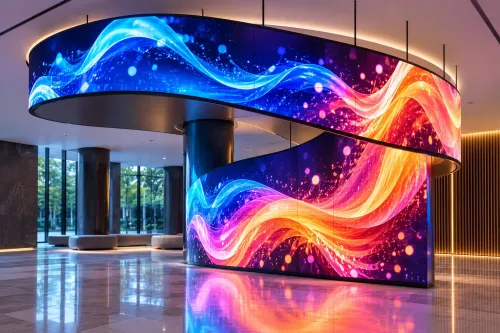
- Choose it for a reception feature wall that follows a sculptural curve, reinforces the hotel identity and remains visible across the arrival route.
- Choose it for a cylindrical lobby column, atrium pillar or curved bar where a flat wall would leave dead angles or require several separate screens.
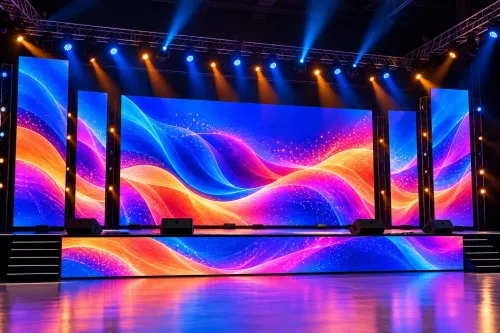
- Choose it for a ballroom stage, restaurant or spa feature where changing content must follow the architecture rather than sit inside a rectangular frame.
- Reject it when the proposed curve is decorative but barely visible, or when rear-only service access would mean removing millwork during repairs.
A flexible LED screen for hotel use is not automatically bendable in every direction. Confirm the convex or concave radius, bending axis, module joins and front-service method before approving the design.
| Application | Flexible system earns value when | Flat indoor LED wall is better when |
|---|---|---|
| Reception feature | The curve improves arrival impact and sightlines | A rectangular brand backdrop meets the brief |
| Lobby column | One display wraps a visible column | Content faces one direction |
| Semi-open entrance | The geometry and visibility justify protected construction | A sheltered flat wall offers the same reach |
| Ballroom stage | The curved canvas supports event content | Standard stage dimensions keep costs and servicing lower |
Compare the Curve With Flat LED, LCD, Projection and Transparent LED
A flexible curve usually costs more than a flat LED wall because you pay for shaped support, geometry correction, calibration and specialist installation, not only LED modules. The comparison changes with viewing distance and ambient light.
| Technology | Cost and image quality | Brightness and viewing distance | Installation and maintenance |
|---|---|---|---|
| Flexible LED | Higher total cost; seamless, bright images, but tight curves need content warping | Strong in bright lobbies; select pixel pitch for close guests or distant viewers | Highest alignment and calibration risk; replace modules and maintain the shaped frame |
| Flat LED | Usually lower total cost; seamless image with predictable geometry | High brightness and suitable for medium to long viewing distances | Simplest structure, commissioning and module replacement |
| LCD video wall | High resolution at close range; bezels interrupt the picture | Bright indoors, but glare and limited wall size affect distant viewing | Cabinet alignment is straightforward; replace panels, not individual LED modules |
| Projection | Lowest hardware cost in a controlled room; image quality falls with ambient light and shadows | Requires a darkened space and sufficient throw distance | Needs projector alignment, lamp or light-source servicing and clear sightlines |
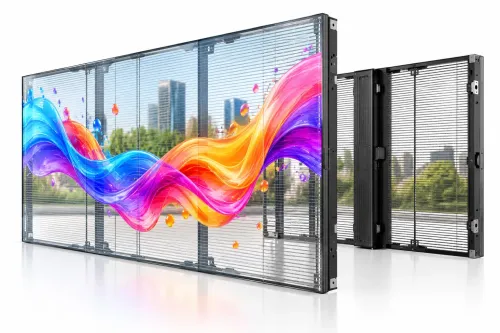
| Transparent LED | Preserves views and daylight; image contrast is weaker than solid LED | Useful for windows and façades, but daylight reduces contrast | Requires careful mounting, cabling and access behind or above the display |
For a curved LED display for hospitality, check the processor’s geometry-mapping capability before using a standard flat-layout video. Otherwise logos and text can look stretched, compressed or misaligned.
Request a physical curve sample, the minimum convex or concave radius, and the service method; a flat sample will not reveal seam errors, uneven brightness or difficult access.-vesm
Measure the Hotel Site Before You Order the Display
Before approving a flexible LED display in Pune, measure the finished surface and specify its geometry, access, power and exposure—not just its width and height.
1. Record the display face dimensions, column diameter, curve direction, convex or concave radius, bend axis and module seams. Ask the supplier to state the minimum radius, module size and whether repeated bending is permitted; a product described as flexible is not bendable in every direction.
2. Check the supporting wall, frame or column for fixing points, allowable load and tolerance. Uneven support or inaccurate alignment creates visible flatness and brightness differences. Request a physical sample curve when the installation follows a tight radius.
3. Mark the service side before construction. Confirm that modules, receiving cards, power supplies and data connections are reachable from the front; rear-only access can force removal of millwork, cladding or architectural finishes during a fault.
4. Calculate typical and maximum electrical load separately, then map dedicated circuits, protection devices, earthing, cable routes, backup capacity, ventilation and power-supply access. Size infrastructure and backup for maximum load, not the nominal LED wattage.
5. Measure direct sun, ambient heat, HVAC airflow, dust, cleaning methods, sprinkler proximity, rain splash, condensation and monsoon drainage. An IP rating under IEC 60529 describes enclosure ingress testing; it does not prove that the complete installation survives rain, pressure washing or trapped moisture.
Photograph the route from delivery point to final position, including lifts, doors and ceiling obstructions. Include those measurements in the technical submittal before fabrication.
Choose the Curve, Pixel Pitch and Protection for Real Hotel Use
Start with sightlines, not the wall shape. Use a concave curve when viewers gather around a reception desk or column; use a convex curve when the screen faces a corridor. Confirm the module’s minimum bend radius and cylinder diameter in writing—forcing a tighter curve creates gaps, shadowing and early module failure.
Apply processor geometry correction, or flat-layout content will look stretched.
| Application | Pixel pitch | Brightness and protection |
|---|---|---|
| Reception backdrop, 2–5 m viewing | 1.5–2.5 mm | 800–1,500 nits; indoor enclosure |
| Lobby column, close circulation | 1.5–2.5 mm | 800–1,500 nits; protect edges from impact |
| Banquet stage, 5–12 m viewing | 2.5–4 mm | 1,200–2,000 nits; front service preferred |
| Entrance or semi-open terrace | 3–6 mm | 3,000–5,000 nits; request tested outdoor IP ratings |
Choose a custom hotel LED display by specifying these controls before construction:
- Demand front access to modules, receiving cards, power supplies and data links. Rear-only access can force removal of millwork or wall finishes.
- Request a camera test at actual shutter speeds, plus a refresh rate of at least 3,840 Hz, to prevent bands or flicker in CCTV and guest video.
- Use impact-resistant edge protection in guest areas; add a sealed enclosure, corrosion-resistant hardware and drainage at semi-open sites.
- Confirm maximum and typical power, earthing, circuit segregation and heat removal. In Pune, ask for condensation precautions, cable-entry sealing, temperature and humidity limits, storage limits and the required monsoon warm-up procedure.
Calculate the Full Cost and Set an Acceptance Test
Calculate a five-year ownership cost, not a square-metre price. Add the LED modules, structure, processor, calibration, installation, commissioning, content integration, access equipment, spare modules, power, planned maintenance and the cost of reopening architectural finishes for rear service.
Divide that total by the number of operating days or booked events the display will support, then compare it with the measurable branding, wayfinding or event-revenue value created by the curve.
1. Request a fixed bill of quantities with quantities, warranty terms, power consumption, replacement-module pricing and service response time. Ask SBW TECHNOLOGY PVT LTD to identify which components remain accessible from the front after the hotel finishes the wall, column or counter.
2. Inspect the physical installation before sign-off. Check module alignment, joins, bend radius, mounting stability, cable routing, ventilation and viewing angles. Do not treat an IP rating as proof against Pune rain, condensation or pressure washing; inspect drainage, seals and the site-specific weather protection.
3. Run a written acceptance test using full-white, red, green, blue, black, grayscale and moving-content files. Record dead pixels, stuck pixels, color uniformity, brightness uniformity, grayscale steps and visible scan defects from the guest viewing positions.
4. Test the complete camera chain at wedding and conference shutter speeds. Confirm no rolling bars or banding, then unplug the network, switch inputs and simulate emergency-power transfer. Approve handover only after recovery works and the promised service-response clock is demonstrated.
Related products
 | Flexible LED Display SBW Technology Private Limited offers Flexible LED Displays designed for creative and curved digital display installations. View product → |
 | Creative Displays SBW Technology Private Limited offers innovative Creative LED Displays designed to transform conventional digital signage into visually striking and... View product → |
Frequently asked questions
When is a flexible LED display worth using in a Pune hotel?
It is worth considering when the hotel architecture creates a curved branding, wayfinding or attention point that a flat display cannot deliver.
How does a curved LED display compare with flat LED, LCD, projection and transparent LED?
Curved LED suits shaped architectural surfaces; flat LED suits standard walls. LCD offers close-view detail, projection needs controlled light and clear throw distance, while transparent LED preserves visibility through glass or open façades.
What should you measure before ordering a flexible hotel LED display?
Measure the surface radius, width, height, viewing distance, delivery route, mounting structure, power supply, ventilation and maintenance access.
What should a hotel include in the full cost and acceptance test?
Include the display, processing, structure, installation, cabling, power, content, service access and replacement parts, then test pixel defects, brightness, colour, playback, safety and viewing performance on site.